Tag: sanskrit literature
-

Ethics in the Upanishads
Literature from across the world engages with ethical questions and moral quandaries, and plays a role in cultivating our moral sensibilities. Religious literatures often present ethical teachings indirectly, such as in the form of parables, or more directly, such as moral commandments. In the Upanishads of late Vedic India, we find both ethical and metaphysical…
-

The rage of the warrior in literature
I previously discussed how strong emotions such as grief and rage well up from a very deep place within the self, expressing themselves in ways which go beyond the usual range of human expression, and how, according to the Indian tradition, the first poetic verse utterance emerged as an expression of deep sorrow. We see…
-
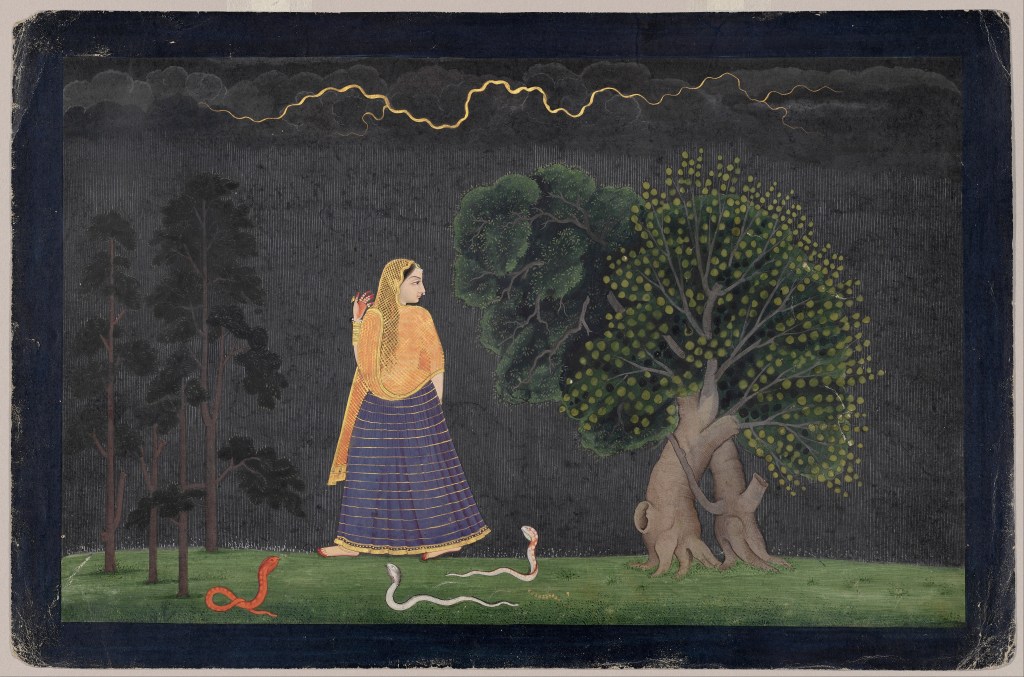
Trysts by night in art and poetry
The painting above, by one of the great Indian artists of the late eighteenth century, Nainsukh, depicts such a scene. Our paramour sneaks away from her home by night to a spot in the forest where she has arranged to meet her lover during the night, and she must be back before anyone awakes and…
-
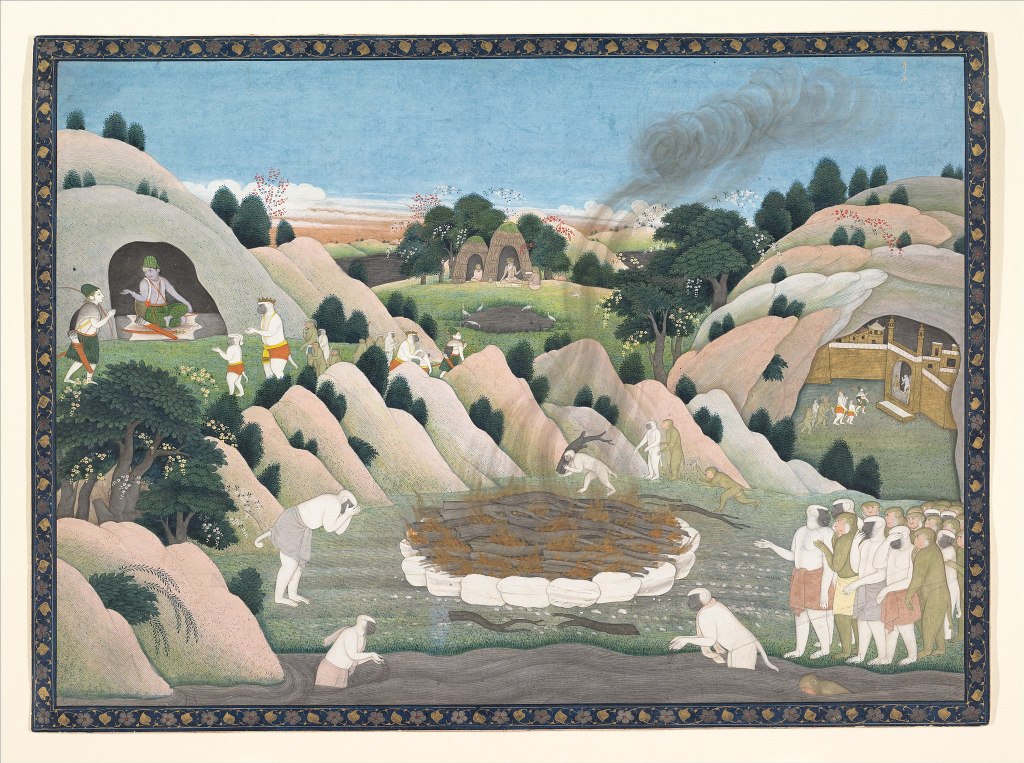
Love, death and Sanskrit literature
In romantic literature across the world, we frequently read about lovers who would die rather than be apart. In the story of Pyramus and Thisbe, Pyramus kills himself, believing Thisbe to be dead. When Thisbe finds the dead body of Pyramus, she also kills herself. Romeo and Juliet, based on this story, and many other…
-

T.S. Eliot, the Vedas and the Concept of Time
The concept of time seems to have been a preoccupation for many leading figures of this generation across a variety of fields, stimulated perhaps in part by the linking of hitherto distant regions through railway and telegraphy during the nineteenth century, and likely also by the impact of Einstein’s work. Such figures might include Henri…
-

Conflicting norms of behaviour: in Greek drama and Indian epic
Polyneices a proper burial. Polyneices has been killed in a battle against his brother and fellow citizens, and, as he is considered a traitor to the kingdom, the king decrees that no-one is to bury him or mourn him. As his sister, however, Antigone feels that she is under an obligation to give him some…
-
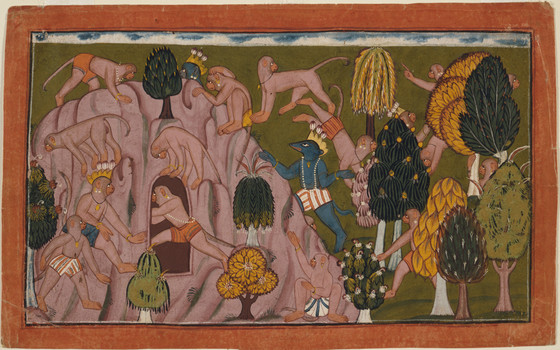
Bear-king Jāmbavān and animal symbolism
We can perhaps identify some similar themes of cultural centrality of the bear in Indian culture, especially in its earliest phases. Similarly to Western mythic taxonomy, the seven stars of Ursa Major are called ‘the bears’ (ṛkṣa) in the Rig Veda (1.24.10), and in fact the Pleiades are their seven wives according to Śatapatha Brāhmaṇa…
-

Talking with the rivers
Rivers have been revered since time immemorial in cultures across the world. For ancient peoples, the pure waters provided by rivers to drink and to water crops must have seemed to be a blessing from nature or from the gods. In the Rig Veda, the sapta-sindhu or seven rivers stand pre-eminent. Two among these, the…
-

Christmas trees and Indian literature
Many Christmas traditions have taken on a rather secular character in the modern world and can be fully enjoyed by us all, whatever the case is about our religious beliefs or lack of them. Among such traditions, the practice of decorating a tree for Christmas appears to be a rather modern one, but with many…
-

Ethics of exile in the Ramayana
Themes of exile, quest and wandering are prominent in epic literature, at least of the Indo-European tradition.
 Desire To Think