Tag: Literature
-

Haruki Murakami and Buddhist philosophy
Over Christmas I read ‘The Wind-up Bird Chronicle’, a novel by Haruki Murakami, in the English translation by Jay Rubin. The strange tale of the protagonist, named Toru Okada, seemed to have a loose affinity with concepts and themes from Buddhist philosophy, which I briefly sketch out here, but whether or not this affinity is…
-

Ethics in the Upanishads
Literature from across the world engages with ethical questions and moral quandaries, and plays a role in cultivating our moral sensibilities. Religious literatures often present ethical teachings indirectly, such as in the form of parables, or more directly, such as moral commandments. In the Upanishads of late Vedic India, we find both ethical and metaphysical…
-

The theft of the mead
In a recent article, I discussed the theft of fire in the Rig Veda, and this may remind us of another similar incident of theft from the gods, viz. the theft of mead or soma by a falcon.
-

The Ring in Indo-European literature
One criticism sometimes made against JRR Tolkien is that he somehow imitated the ring-based plot of Richard Wagner’s opera cycle ‘The Ring of the Nibelung’ in his own master work ‘The Lord of the Rings’. Prof. Tolkien expressly disclaimed any similarity between his own work and that of Wagner, once comparing his Lord of the…
-

The rage of the warrior in literature
I previously discussed how strong emotions such as grief and rage well up from a very deep place within the self, expressing themselves in ways which go beyond the usual range of human expression, and how, according to the Indian tradition, the first poetic verse utterance emerged as an expression of deep sorrow. We see…
-

On epic literature and the emotions
Great literature can express emotions in ways that are powerful yet also subtle. This is clear in epic literature, such as in the Iliad, which announces itself straight off the bat as a poem rooted in a specific emotion, viz. rage.
-
Some Indo-European thoughts on time
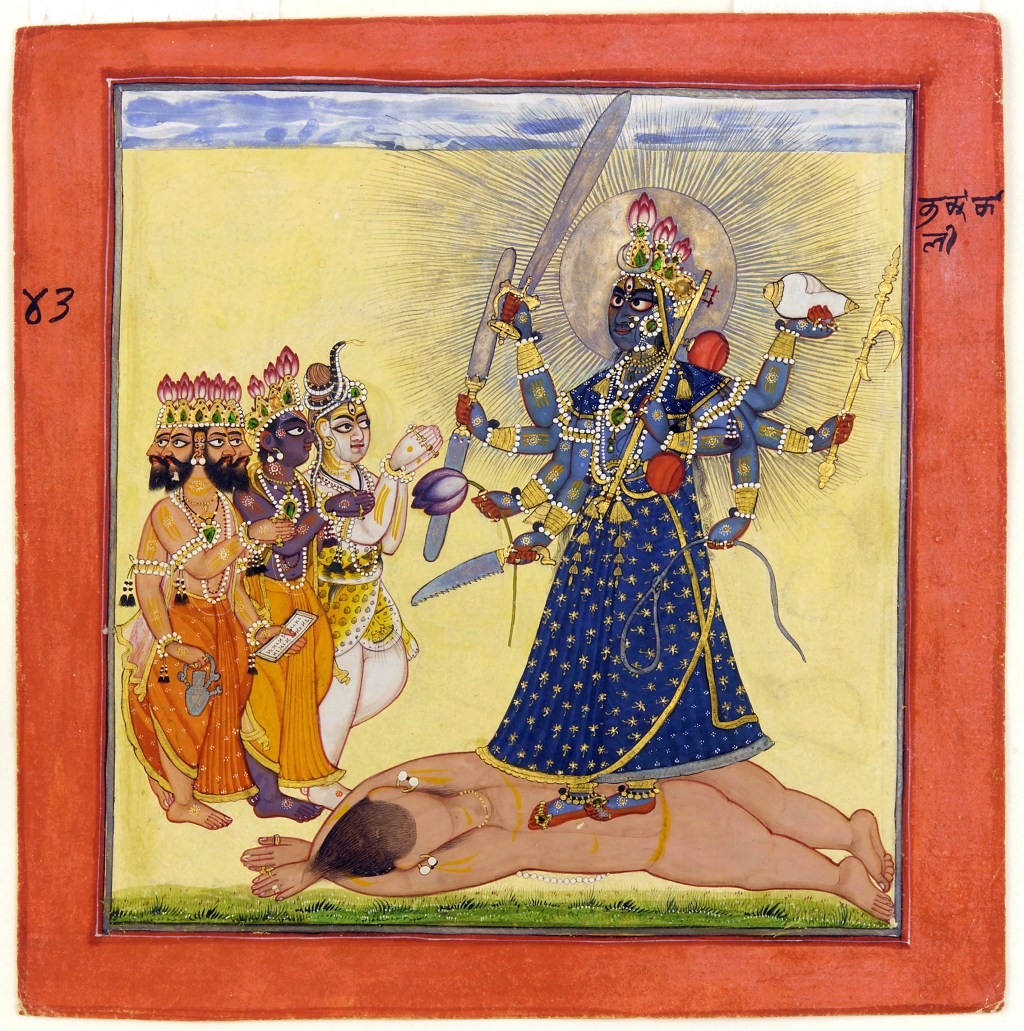
Our day-to-day experience of time passing can be highly non-linear and subjective, as we move from giving rapid presentations to enjoying lazy Sunday afternoons. Science too has studied how our brains have the ability to slow down and speed up our perception of time. In this way, our lived experience of the flow of time…
-
Trysts by night in art and poetry
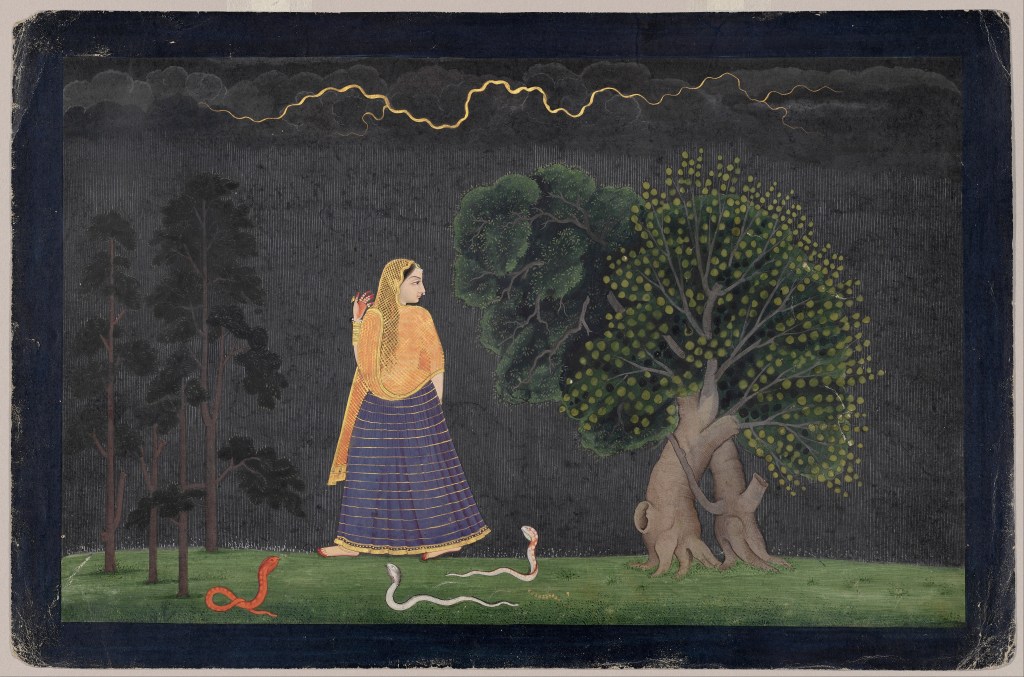
The painting above, by one of the great Indian artists of the late eighteenth century, Nainsukh, depicts such a scene. Our paramour sneaks away from her home by night to a spot in the forest where she has arranged to meet her lover during the night, and she must be back before anyone awakes and…
-
Love, death and Sanskrit literature
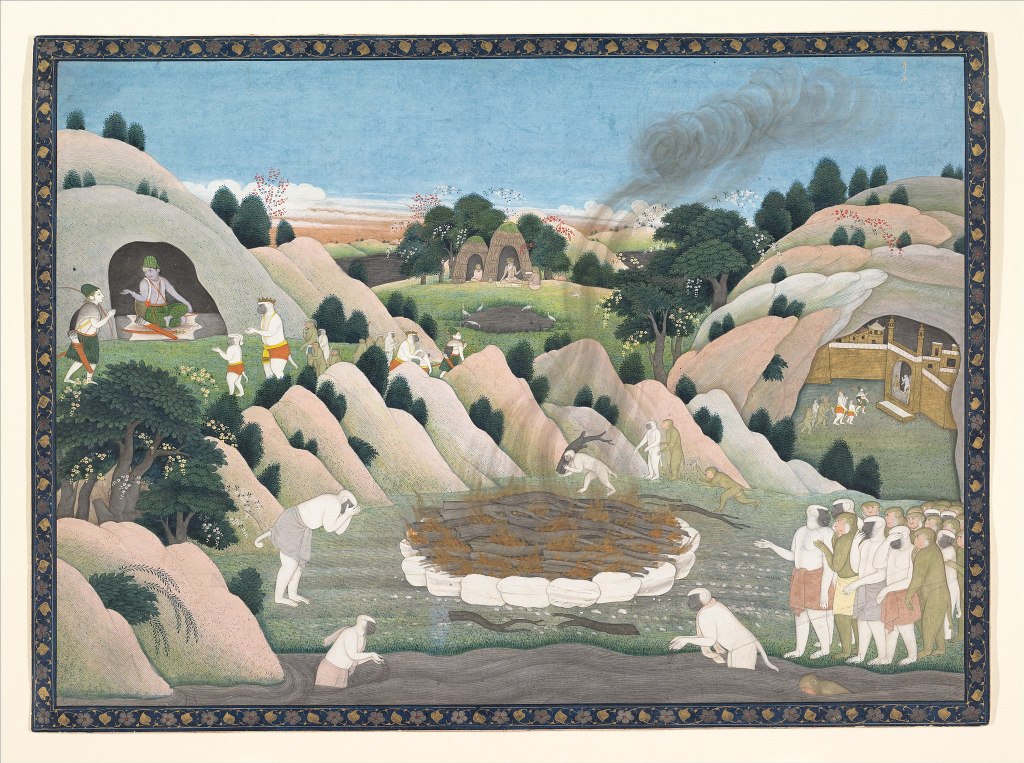
In romantic literature across the world, we frequently read about lovers who would die rather than be apart. In the story of Pyramus and Thisbe, Pyramus kills himself, believing Thisbe to be dead. When Thisbe finds the dead body of Pyramus, she also kills herself. Romeo and Juliet, based on this story, and many other…
-

T.S. Eliot, the Vedas and the Concept of Time
The concept of time seems to have been a preoccupation for many leading figures of this generation across a variety of fields, stimulated perhaps in part by the linking of hitherto distant regions through railway and telegraphy during the nineteenth century, and likely also by the impact of Einstein’s work. Such figures might include Henri…
 Desire To Think