Desire To Think
-
Creation in the Rig Veda
Exterior (shutters) of The Garden of Earthly Delights — Wikimedia Commons One of its several narratives in comparative perspective The Ṛg Veda contains various accounts of the creation of the universe, including the famous Nāsadīya Sūkta which I have previously discussed. That sets out a rather philosophically sophisticated and speculative idea about a single monistic principle whereby…
-
Ethics in the Mahābhārata
The disrobing of Draupadi, attributed to Nainsukh, c.1765 — Wikimedia Commons Dharma and the difficulty of moral deliberation Why do bad things happen to good people? What is the best way to respond to sufferings or difficulties in life? How can we maintain faith in a moral standard in the face of the challenges and complexities of…
-
The Battle of Ten Kings
Ahi-Kshetra – the ancient capital of Northern Panchala — Wikimedia Commons The account in the Ṛg Veda and the legacy for modern India The seventh maṇḍala of the Ṛg Veda was largely composed by the Rṣi Vasiṣṭha Maitrāvaruṇi, well-known from later literature too, especially for the mutual antagonism between him and Viśvamitra. It commemorates some events leading…
-
The moral concern of the gods
Varuna, the God of Waters (1675–1700) — LACMA The Ᾱdityas in Indian history Do the gods care about the moral development of humanity? Do they encourage morally good behaviour and oppose those who act unethically? Many of the poets of the Rig Veda seem to have believed so, as did their Avestan compatriots. This article will present…
-
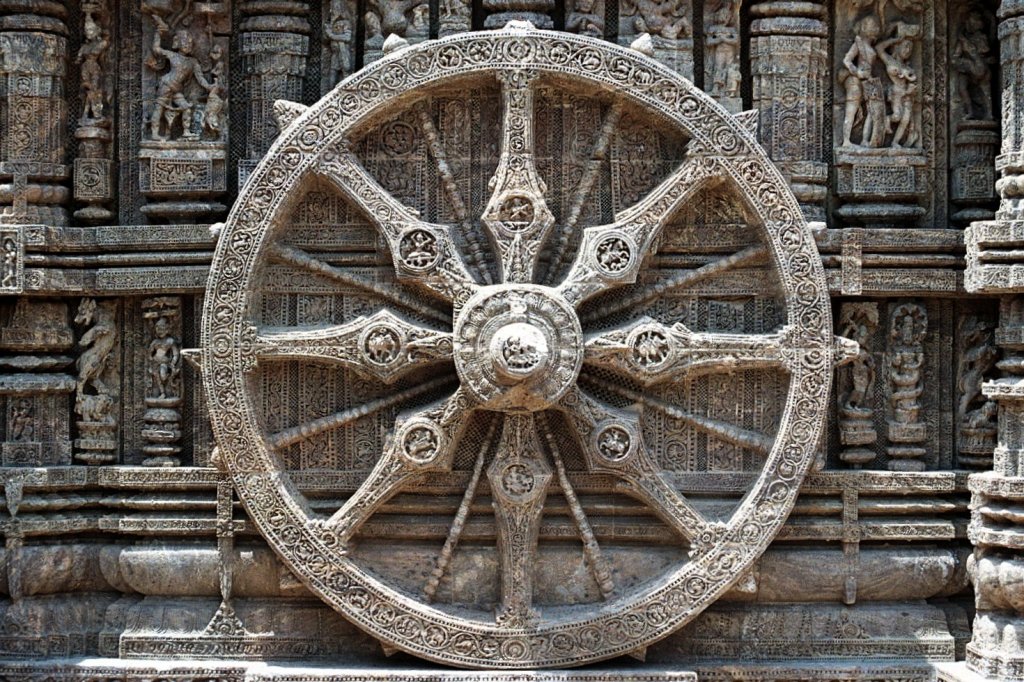
The Wheel and the Dharmacakra
Dholavira Signboard — Wikimedia Commons From the Rig Veda to independent India Starting from maybe the mid-fourth millennium B.C., the proto-Indo-European people seem to have been constantly on the move, spreading out to the West and to the East. The full motivation for such rapid and multi-directional waves of migration is not well-understood, but the availability of…
-
Religion and morality in the Vedas
Devi in the Form of Bhadrakali Adored by the Gods — Met Museum Its significance in comparative Indo-European perspective A prominent theme for many religions has been to give a coherent account of good and evil in the world. A perspective that came quite naturally to ancient people was to posit a cosmic struggle between various gods and…
-
The Divine Twins in the Veda
Arjuna and His Charioteer Krishna Confront Karna — Philadelphia Museum of Art … and in other Indo-European Sources There are significant difficulties in reconstructing many aspects of Proto-Indo-European culture, yet it is possible even to find some continuity of culture even to the present day, including glimpses of its religious practice and its pantheon of deities. Apart from…
-
Emotions and Indian Dramatic Expression
Todi Ragini, from a Ragamala Series — Cleveland Museum of Art Indian Aesthetics from the Upanishads to Bollywood “In the beginning, this [reality] was non-existent. Then existence was produced. That [Brahman] created itself by itself. So it is called well-made. That which is well-made is in fact rasa. For bliss arises only having obtained rasa.” [Taittirīya Upanishad 2.7.1]…
-
Fate and free will on the Silk Road
Buddhist monks and philosophical concepts A depiction of the Chinese monk Xuanzang on his journey to India — Wikimedia Commons “On one hand, it’s nihilistic to think that every outcome is simply random. I have to believe that the world is better when we act morally, and that people who do good things deserve a somewhat better…
-
What is eternal dharma?
How should a person who wants to practice dharma behave? What is eternal dharma?
Got any book recommendations?
 Desire To Think