Category: Uncategorized
-

India, Africa and African Americans
Cultural exchange and interaction between African or African-origin people and Indian people has a long and important history
-

Some technological worldviews
In our attempt to understand our universe and our place within it, thinkers of all periods and regions have deployed models borrowed from technological frameworks.
-

Ethics and Action in Indian Literature
Dharma, religion and morality in the Mahabharata
-
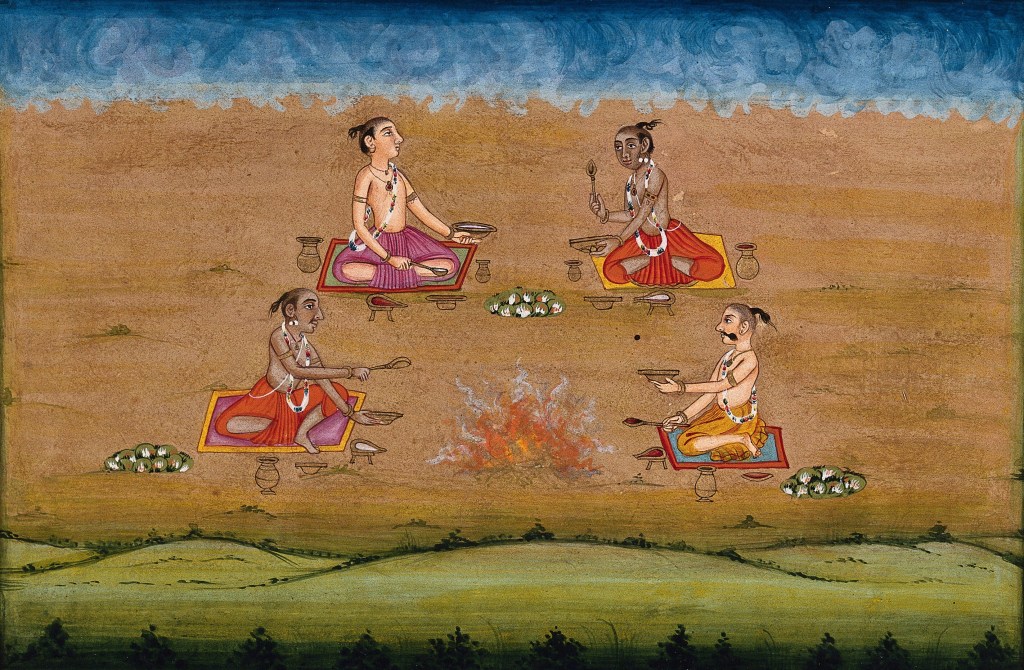
Emotions and Indian music
The Sāma Veda and its place in the Indian musical tradition
-

Chance events and Indian Philosophy
Encountering reality as radically singular, unique and ineffable
-

The Self in Indian Philosophy
Reflecting on the chariot as a metaphor for the Self
-
Death and the Rig Veda
King Dasharatha cremates Shravana and his aged Parents — Wikimedia Commons (B.N.Goswamy/ Gazal world) Ideas about some kind of afterlife are commonly found in all religions. In the Bhagavad Gītā, Krishna explains that those who resort to him do not get ‘punarjanma’ (rebirth in this world). A precursor to ‘punarjanma’ is the idea of ‘punarmṛtyu’ or ‘re-death’, found…
-
T.S. Eliot and Indian Philosophy
T.S. Eliot — Wikimedia Commons (Octave.H) It is well-known that T.S. Eliot engaged deeply with Indian philosophy in ways which significantly influenced his worldview and his poetry. In fact,Eliot was a student of the eminent Sanskrit scholar Professor Charles Rockwell Lanman at Harvard University, and in fact Eliot’s PhD supervisor there, Josiah Royce, had also earlier learnt…
-
The Setubandha of Pravarasena
Monkey Army building a stone bridge to cross sea on way to Lanka — Wikimedia Commons (Ms Sarah Welch) The Prakrit languages have a very rich and complex literary history dating back to at least the early centuries AD. As Prof. Andrew Ollett explains – “Like Sanskrit, [Prakrit] was a language of literary intellectual culture, and cut across…
-
Śakuntalā’s poem
Dushyanta and Shakuntala in a Landscape — LACMA The play Abhijnāna-Śakuntalam is one of the most well-known and frequently-performed works by the renowned Indian poet Kālidāsa. The play is based on the famous story found in the Mahābhārata about the romance of Śakuntalā and Duṣyanta. However, Kālidāsa uses his own creative imagination to add some additional twists…
 Desire To Think